
Age and Dentition in archaeological remains of Lama guanicoe: A step-by-step methodology for constructing age profiles in Layer 5 of Intihuasi (Central Argentina) METODOLOGÍA PASO A PASO PARA LA CONSTRUCCIÓN DE PERFILES ETARIOS
Article Sidebar
Main Article Content
Abstract
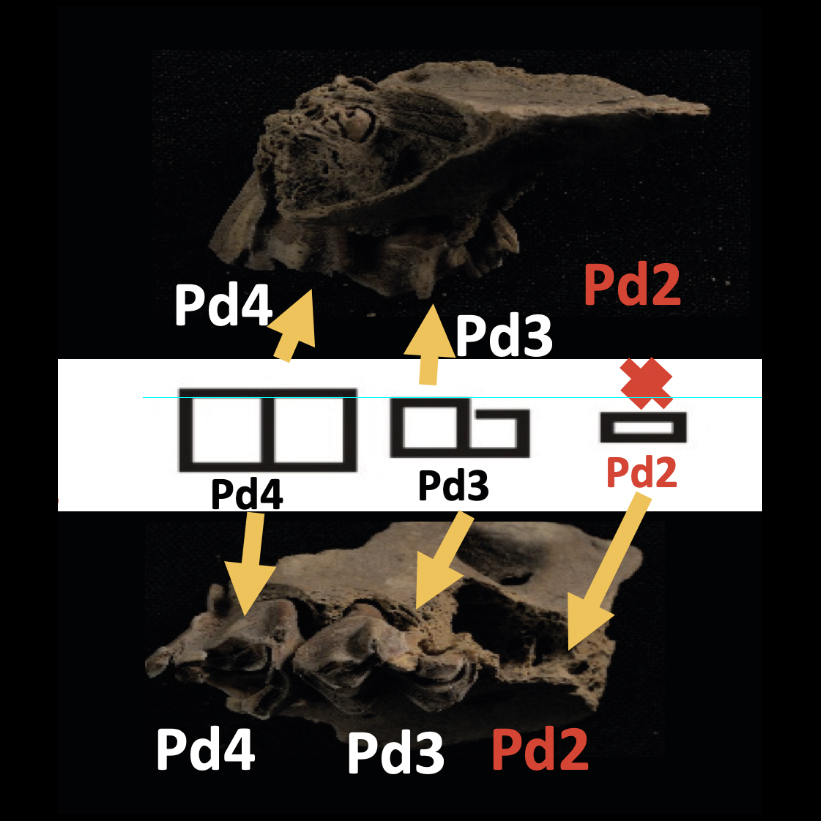
This article presents a methodological guide for the age determination of guanaco remains (Lama guanicoe) based on dental eruption and wear chronograms, focusing on its practical utility for zooarchaeological research centered on South American camelids. The analysis procedure is detailed, from the identification of dental pieces to their assignment into specific age categories, highlighting challenges inherent to the fragmentary nature of the archaeological record. This proposal aims to facilitate the construction of age profiles of camelid populations exploited by past human groups, enabling the interpretation of hunting patterns, subsistence strategies, and interactions between humans and their environment, depending on the specific questions and regions of each researcher. The steps required to perform age estimations are illustrated through the detailed example of the archaeofauna from layer 5 of Intihuasi (San Luis, Argentina), even in contexts with limited or highly fragmented samples. The study emphasizes the importance of accessible and systematic tools for those new to zooarchaeology, providing a solid foundation for analyzing archaeofaunal assemblages.
Downloads
Article Details

This work is licensed under a Creative Commons Attribution-NonCommercial 4.0 International License.
References
Alunni, D.V., Gutiérrez, M.A., y Zangrando, A.F. (2017). Natural accumulation and distribution of guanaco bones in the southernmost tip of Tierra del Fuego (Argentina): Taphonomic analysis and archaeological implications. Journal of Taphonomy, 15(1-3), 59-76.
Battista, F., y Schultz, C.L. (2024). Sampling and collector biases as taphonomic filters: an overview. Annals of the Brazilian Academy of Sciences, 96(4), 1-19.
Bieraugle, M., Ding, L., Cluff, H.D., Jutha, N., y Robert, J. (2024). Ageing wolves through crown height measurements and its implications for ageing canids. Archaeological and Anthropological Sciences, 16, 157. https://doi.org/10.1007/s12520-024-01894-2
Binford, L.R. (2001). Constructing frames of reference. University of California Press.
Bonomo, M. (2005). Costeando las llanuras: Arqueología del litoral marítimo pampeano. Sociedad Argentina de Antropología.
Broughton, J. M. (1999). Resource depression and intensification during the Late Holocene, San Francisco Bay: Evidence from Emeryville Shellmound vertebrate fauna. University of California Press.
Bunn, H.T., y Gurtov, A.N. (2014). Prey mortality profiles indicate that Early Pleistocene Homo at Olduvai was an ambush predator. Quaternary International, 322-323, 44-53.
Bunn, H.T. (2019). Large ungulate mortality profiles and ambush hunting by Acheulean-age hominins at Elandsfontein, Western Cape Province, South Africa. Journal of Archaeological Science, 107, 40-49.
Capriles, J.M. (2014). The economic organization of early camelid pastoralism in the Andean highlands of Bolivia (BAR International Series 2597). Archaeopress.
Capriles, J.M. (2016). The subsistence economy of early Andean pastoralists. En J.M. Capriles y N. Tripcevich (Eds.), The archaeology of Andean pastoralism (pp. 39-54). University of New Mexico Press.
Discamps, E., y Costamagno, S. (2015). Improving mortality profile analysis in zooarchaeology: A revised zoning for ternary diagrams. Journal of Archaeological Science, 55, 126-135. https://doi.org/10.1016/j.jas.2014.12.017
Fernández, N.L., y De Nigris, M.E. (2015). Prácticas de caza: Análisis de mandíbulas y maxilares de guanaco del sitio Cerro Casa de Piedra 7 (Santa Cruz, Argentina). Magallania, 43(2), 155-166.
Fernández, N.L. (2017). Evaluación de perfiles de mortalidad en guanacos (Lama guanicoe): Nuevas aproximaciones a los conjuntos zooarqueológicos del sitio Cerro Casa de Piedra 5 (Santa Cruz, Argentina). Cuadernos del Instituto Nacional de Antropología y Pensamiento Latinoamericano - Series Especiales, 44, 49-58.
Fernandez, P., y Legendre, S. (2003). Mortality curves for horses from the Middle Palaeolithic site of Bau de l´Aubesier (Vaucluse, France): Methodological, palaeo-ethnological, and palaeo-ecological approaches. Journal of Archaeological Science, 30, 1577-1598.
González, A.R. (1952). Antiguo horizonte precerámico en las Sierras Centrales de Argentina. Runa, 5, 110-113.
González, A.R. (1960). La estratigrafía de la gruta de Intihuasi (Prov. de San Luis, RA) y sus relaciones con otros sitios precerámicos de Sudamérica. Revista del Instituto de Antropología, 1, 5-296.
Gorosábel, A., Loponte, D., y Corriale, M.J. (2016). Mortalidad estacional de carpinchos (Hydrochoerus hydrochaeris) y su relación con la disponibilidad de recursos en los Esteros del Iberá, Argentina. Mastozoología Neotropical, 23(2), 401-413.
Haynes, G. (1991). Mammoths, mastodonts, and elephants: Biology, behavior, and the fossil record. Cambridge University Press.
Heider, G., Curtoni, R., Borgo, M., Chiesa, J., Oliván, A., y Martínez Quirós, V. (2022). New research on the Intihuasi Cave, San Luis, Argentina: Implications for the peopling of the Southern Cone of South America. Latin American Antiquity, 33(4), 857-862. https://doi.org/10.1017/laq.2022.36
Izeta, A.D. (2007). Zooarqueología del sur de los valles Calchaquíes (Provincias de Catamarca y Tucumán, República Argentina) (BAR International Series 1612). Archaeopress.
Kaufmann, C.A. (2009). Estructura de edad y sexo en Lama guanicoe (guanaco): Estudios actualísticos y arqueológicos en Pampa y Patagonia. Sociedad Argentina de Antropología.
Kent, J.D. (1982). The domestication and exploitation of the South American camelids [Doctoral dissertation]. Washington University in St. Louis.
Klein, R.G. (1982). Patterns of ungulate mortality and ungulate mortality profiles from Langebaanweg (Early Pliocene) and Elandsfontein (Middle Pleistocene), South-Western Cape Province, South Africa. Annals of the South African Museum, 90(2), 49-94.
Legge, A.J., y Rowley-Conwy, P.A. (1987). Caza de gacelas en la Siria de la Edad de Piedra. Investigación y Ciencia, 133, 72-80.
López, G.E.J., y Restifo, F. (2014). Procesos de diversificación, intensificación y domesticación durante el Holoceno en las tierras altas del norte de Argentina y Chile: Aportes desde la Puna de Salta. Comechingonia, 18, 95-116.
Loponte, D., Corriale, M.J., Mucciolo, L., y Acosta, A. (2019). Sex- and age-biased exploitation and metric characterization of medium-sized deer in the lower Paraná wetland, South America. International Journal of Osteoarchaeology, 29(6), 1-26.
Lyman, R.L. (1987). On the analysis of vertebrate mortality profiles: Sample size, mortality type, and hunting pressure. American Antiquity, 52(1), 125-142.
Menéndez, I., Gómez Cano, A.R., y Hernández Fernández, M. (2017). Mortalidad excepcional en los cricétidos (Rodentia) del Mioceno medio de Somosaguas (Pozuelo de Alarcón, Madrid). Estudios Geológicos, 73(1), 1-13. https://doi.org/10.3989/egeol.42407.430
Mengoni Goñalons, G.L., y Yacobaccio, H.D. (2006). The domestication of South American camelids. En M.A. Zeder, D.G. Bradley, E. Emshwiller y B.D. Smith (Eds.), Documenting domestication: New genetic and archaeological paradigms (pp. 228-244). University of California Press.
Moore, K.M. (1989). Hunting and the origins of herding in Peru [Doctoral dissertation]. University of Michigan.
Orsi, J.P., y López, G.E.J. (2019). Análisis del registro arqueofaunístico del sitio Abrigo Pozo Cavado, Puna de Salta, Argentina, durante el Holoceno medio y comienzos del Holoceno tardío. Mundo de Antes, 13(2), 69-90.
Pascual, R. (1960). Informe sobre los restos de vertebrados hallados en la Caverna de Intihuasi y “paraderos” vecinos de San Luis. Revista del Instituto de Antropología, 299-302.
Pelizza, F., y Heider, G. (2023). Caza, maxilares y perfiles de mortalidad de Lama guanicoe en Intihuasi. En M. Núñez Camelino, M.C. Barboza, C. Piccoli, M. V. Roca y C. Scabuzzo (Eds.), Libro de resúmenes XXI Congreso Nacional de Arqueología Argentina (p. 229). Universidad Nacional del Nordeste.
Reitz, E.J., y Wing, E.S. (2008). Zooarchaeology (2nd ed.). Cambridge University Press.
Rusconi, C. (1930). Evolución cráneodental de la nutria (Myocastor coypus bonariensis) a través de su desarrollo postembrionario. Anales de la Sociedad Científica Argentina, 110, 5-31.
Scheifler, N.A., Vitale, P., y Kaufmann, C.A. (2021). Primeros datos isotópicos (δ13Ccol, δ15N) de una población moderna de guanaco en el Monte de Patagonia nororiental: Implicancias paleoecológicas y arqueológicas. Intersecciones en Antropología, 22(2), 219-230.
Steele, T.E. (2004). Variation in mortality profiles of red deer (Cervus elaphus) in Middle Palaeolithic assemblages from Western Europe. International Journal of Osteoarchaeology, 14, 307-320.
Stiner, M.C. (1990). The use of mortality patterns in archaeological studies of hominid predatory adaptations. Journal of Anthropological Archaeology, 9, 305-351.
Stiner, M.C. (1998). Mortality analysis of Pleistocene bears and its paleoanthropological relevance. Journal of Human Evolution, 34, 303-326.
Stiner, M.C. (2012). Competition Theory and the Case for Pleistocene Hominin-Carnivore Co-evolution. Journal of Taphonomy, 10(3-4), 129-145.
Trinkaus, E. (1995). Neanderthal mortality patterns. Journal of Archaeological Science, 22, 121-142.
Trinkaus, E. (2011). Late Pleistocene adult mortality patterns and modern human establishment. Proceedings of the National Academy of Sciences, 108, 1267-1271.
Twiss, K.C. (2008). An assessment of the archaeological applicability of faunal ageing methods based on dental wear. International Journal of Osteoarchaeology, 8, 329-351.
Weaver, T.D., Boyko, R.H., y Steele, T.E. (2011). Cross-platform program for likelihood-based statistical comparisons of mortality profiles on a triangular graph. Journal of Archaeological Science, 38, 2420-2423.
Wheeler, J.C. (1982). Aging llamas and alpacas by their teeth. Llama World, 1(2), 12-17.
Wing, E.S. (1972). Utilization of animal resources in the Peruvian Andes. En S. Ichikawa y K. Terada (Eds.), Andes 4: Excavations at Kotosh, 1963 and 1964 (pp. 327-351). University of Tokyo Press.
Willey, G., y Phillips, P. (1958). Method and theory in American archaeology. University of Chicago Press.
Yacobaccio, H.D., Madero, C.M., y Malmierca, M.P. (1998). Etnoarqueología de pastores surandinos. Grupo Zooarqueología de Camélidos.